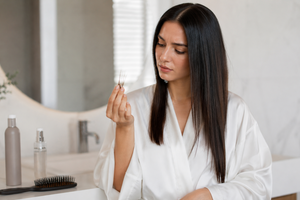
Hair loss is one of the most common reasons for visiting a trichologist or cosmetologist. Stress, hormone fluctuations, aggressive treatments, and seasonal factors all play a role, but the root cause of the problem is often a deficiency in vitamins and minerals. Hair is not a vital organ, so when there is a lack of nutrients, the body conserves them. Let's try to figure out which vitamins are needed to prevent hair loss, when it is worth taking dietary supplements, and which supplements work from the point of view of modern science.
How vitamin deficiency affects the condition of the scalp

The scalp is an active biological zone with a high rate of cell renewal. Hair follicles are sensitive to any disturbances in metabolism, blood supply, and endocrine system function. Vitamin deficiency disrupts follicle nutrition, shortens the growth phase (anagen), and causes hair to prematurely enter the shedding phase.
In addition to increased hair loss, a lack of nutrients can manifest itself in dry scalp, itching, slow growth, brittleness, and loss of hair density. It is important to understand that external remedies work on the surface and skin, but without internal balance, it is difficult to eliminate the problem.
Which vitamins and minerals are most commonly associated with hair loss?
Hair loss can be caused by a lack of many nutrients. But determining which vitamins are needed to prevent hair loss is fairly easy. Trichologists and laboratory tests most often reveal deficiencies in certain nutrients. Among the key nutrients that directly affect hair growth and quality are:
- Iron. A deficiency of this nutrient is one of the most common, especially in women of reproductive age. A decrease in ferritin levels impairs oxygen supply to the hair follicles, leading to diffuse and prolonged hair loss.
- Vitamin D. It regulates the life cycle of the hair follicle and is involved in the scalp's immune processes. Its deficiency is often accompanied by increased hair loss and decreased hair density, especially in the fall and winter.
- B vitamins (B7 - biotin, B9 - folic acid, B12). They are necessary for cell division, keratin synthesis, and the normal functioning of the nervous system. Without these vitamins, hair becomes brittle, dull, and growth slows noticeably. Vitamin B7 is the most well-known vitamin for preventing and treating hair loss, and many women wonder whether biotin works for hair loss. In fact, its effectiveness is only noticeable in cases of deficiency, and it is rarely found in isolation.
- Zinc: Plays a key role in tissue regeneration and maintaining a healthy scalp. A deficiency can cause not only hair loss, but also increased oiliness, itching, and disruption of the sebaceous glands.
- Selenium: An important antioxidant micronutrient that helps neutralize oxidative stress. A deficiency worsens scalp condition, and hair follicles become more vulnerable to external factors.
- Omega-3 fatty acids: They improve microcirculation and help reduce inflammation in the scalp. A deficiency often manifests as dryness, decreased hair elasticity, and increased skin sensitivity.
Many doctors recommend taking hair vitamins during seasonal hair loss, when the body does not receive enough beneficial nutrients from the diet.
When to consider taking supplements

Vitamins and nutrients can be a useful tool for correcting identified disorders. The following signs from the body most often indicate the need for supplements:
- increased hair loss for more than 2–3 months;
- slowed growth and reduced density;
- chronic fatigue, dry skin, brittle nails;
- the period after illness, childbirth, strict diets, or stress.
When several factors coincide, the likelihood of nutritional deficiency increases significantly.
Which vitamins to use: the role of Oxvit complexes
When considering which supplements can help with hair loss, it's worth listening to the advice of specialists. To address deficiencies, doctors increasingly recommend complex supplements rather than single-ingredient medications. This allows for the synergistic effect of vitamins and microelements to be taken into account.
A good option may be supplements from the well-known Oxvit brand. Their line includes a product called “Hair, Skin & Nails,” which is designed to support hair follicles, normalize metabolic processes, and reduce the effects of deficiencies. It contains B vitamins, minerals, hyaluronic acid, and antioxidant components that are often prescribed in trichological practice. This approach is especially relevant for seasonal hair loss and recovery after stressful periods.
It is important to remember that even high-quality dietary supplements, such as collagen and keratin supplements for hair, are only effective when taken in courses and correctly selected for the specific needs of the body.
Hair loss due to vitamin deficiency is a sign of internal imbalance. The best strategy is to get tested, identify deficiencies, and choose hair supplements together with a specialist. You can always purchase high-quality dietary supplements and professional hair care products at our KeratinShop store. You can also order Biocyte DETOX & HARMONY products for detoxifying the body, which may also be useful for combating hair loss. We guarantee the authenticity of our products, prompt order processing, and delivery throughout the United States.